

What Permissions Are Required for Hosting Events at Large Venues?
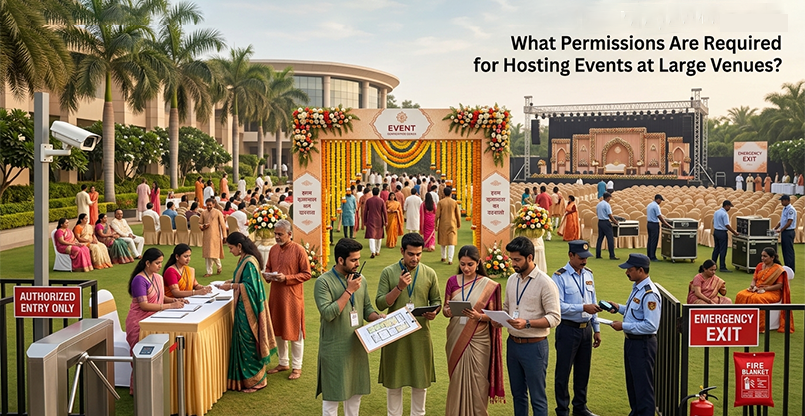
Hosting events at large venues requires obtaining several essential permissions to ensure legal compliance, safety and smooth execution. First, organizers must secure a venue booking agreement along with local municipal permissions, which authorize the use of the space for public or private gatherings. Police permission is often mandatory for crowd control, security arrangements and traffic management, especially for high-attendance events. Fire safety clearance is another critical requirement, ensuring that the venue meets emergency preparedness standards and has adequate fire exits and equipment.
Additionally, organizers may need licenses for sound and music, particularly if the event includes amplified audio or live performances, to comply with noise pollution regulations. Health and sanitation approvals are necessary when food and beverages are served, ensuring hygiene standards are maintained. In some cases, event insurance is required to cover potential risks, liabilities or damages during the event. If the event involves alcohol service, a liquor license must be obtained from the relevant authorities.
Why Event Permissions Are Important for Large Venues
Event permissions are essential for large venues as they ensure that all activities are conducted in compliance with legal and regulatory frameworks. These approvals help organizers avoid fines, legal disputes or last-minute cancellations that can disrupt the event. Permissions from authorities such as local municipalities and law enforcement agencies ensure proper crowd management, security and traffic control. They also guarantee that the venue meets safety standards, including fire protection measures and emergency response readiness.
Moreover, obtaining the necessary licenses for sound, food and alcohol helps maintain public order and health standards. Event permissions also play a key role in minimizing risks by ensuring that all operational aspects are properly assessed and approved. They build credibility and trust among attendees, sponsors and stakeholders by demonstrating professionalism and accountability. Compliance with regulations further protects the environment and surrounding communities from potential disturbances. In addition, having the right permissions enables smooth coordination with vendors, staff and government bodies. It also ensures that insurance coverage and liability protections are valid during the event. Ultimately, securing event permissions is a crucial step in delivering a safe, well-organized and legally compliant event experience at large venues.
Complete Checklist of Permissions Required for Hosting Events
A complete checklist of permissions required for hosting events ensures that every legal, safety and operational aspect is properly addressed before execution. Organizers must first obtain venue booking confirmation along with local municipal approval to conduct the Event Planning. Police permission is essential for maintaining law and order, crowd control and traffic regulation. Fire department clearance is required to confirm that the venue complies with safety standards and emergency protocols. Additionally, sound and entertainment licenses are necessary if the event includes music, performances or amplified audio systems.
Food safety permits must be secured when catering services are involved to ensure hygiene and public health compliance. A liquor license is mandatory if alcohol is served during the event. Event insurance coverage is also important to protect against potential risks, damages or liabilities. Admissions for temporary structures, branding displays and signage may be required depending on the event setup. Environmental approvals might be needed for large-scale events that impact public spaces or surroundings. Tax registrations such as GST compliance should also be considered where applicable.
Documents Required for Event Permissions in India
The documents required for event permissions typically include a formal application letter detailing the event purpose, date, time and venue information. Organizers must provide valid identity proof and organizational registration documents, if applicable. A venue booking confirmation or agreement is essential to verify the event location. Additionally, layout plans, crowd management strategies and safety measures such as fire exit plans may be required by authorities. Supporting documents like NOCs, vendor agreements and insurance certificates help complete the approval process efficiently.
Cost and Time Required to Get Event Permissions
The cost and time required to obtain event permissions vary depending on the event size, location and type of activities involved. Typically, basic permissions such as municipal and police approvals may take 3 to 7 working days, while more complex clearances can extend up to 2–4 weeks. Fire safety and health department approvals are usually processed within a week if all documents are in order.Costs can range from minimal administrative fees to higher charges for large-scale events, especially when multiple licenses are required.
Sound permits, liquor licenses and special event permissions often involve additional fees based on duration and scale. Professional consultation or agency support may also add to the overall expense.Delays may occur if documentation is incomplete or if approvals from multiple departments are needed. Therefore, early planning and submission of accurate documents help reduce both time and costs. Proper budgeting for permissions ensures smooth event execution without unexpected financial or legal challenges.
Common Mistakes to Avoid When Applying for Event Permissions
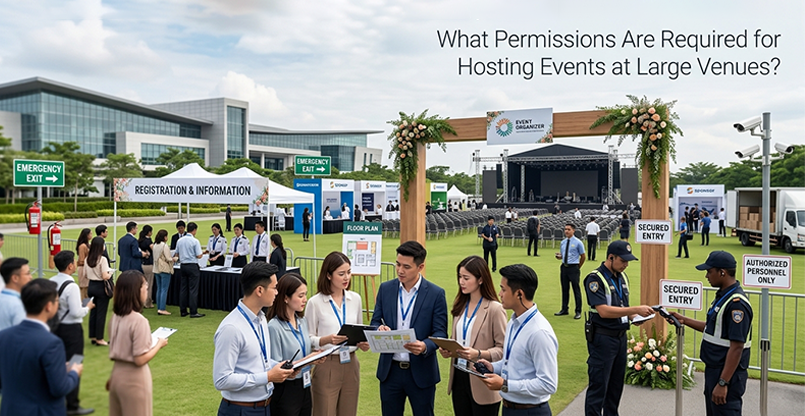
One common mistake when applying for event permissions is submitting incomplete or incorrect documentation, which often leads to delays or rejections. Many organizers underestimate the time required for approvals and apply too late, risking last-minute complications. Ignoring specific local regulations, such as noise limits or crowd capacity rules, can result in penalties or event shutdowns. Another frequent error is failing to obtain all necessary permits, including fire safety, police clearance or licenses for food and alcohol. Poor coordination with authorities and lack of follow-up can also slow down the approval process. Avoiding these mistakes ensures a smoother, compliant and successfully executed event.
Conclusion
Securing the permissions required for hosting events is a vital step in organizing any successful event at a large venue. From ensuring safety and compliance to avoiding legal complications, these approvals play a crucial role in smooth execution. By understanding the process, preparing the necessary documents and coordinating with authorities, organizers can create memorable events without unnecessary challenges. Professional planners like Memories Unlimited bring expertise and efficiency to this process, helping clients navigate permissions seamlessly while delivering exceptional event experiences.
FAQs
1. What permissions are required for hosting events in India?
The permissions required for hosting events typically include police approval, fire safety clearance, sound permission and municipal authorization. Depending on the event type, additional approvals such as health, sanitation and electricity permissions may also be needed.
2. Do small events also need permissions in India?
Yes, even small events may require certain permissions depending on the location, number of attendees and activities involved. Understanding the permissions required for hosting events, even on a smaller scale, helps organizers stay compliant with local regulations and avoid unexpected disruptions.
3. How long does it take to get event permissions in India?
The time required to obtain permissions required for hosting events can vary from a few days to several weeks. It depends on the type of event, number of approvals needed and efficiency of documentation.
Related posts:
 Which Wedding Concepts Have Redefined Classic Weddings Recently?
 How can effective communication between event planners and clients enhance overall event planning success?
 How Do Organizers Ensure Smooth Communication with Vendors During Event Planning?
 How Can Influencer Marketing Boost Event Attendance?